
Health Tips
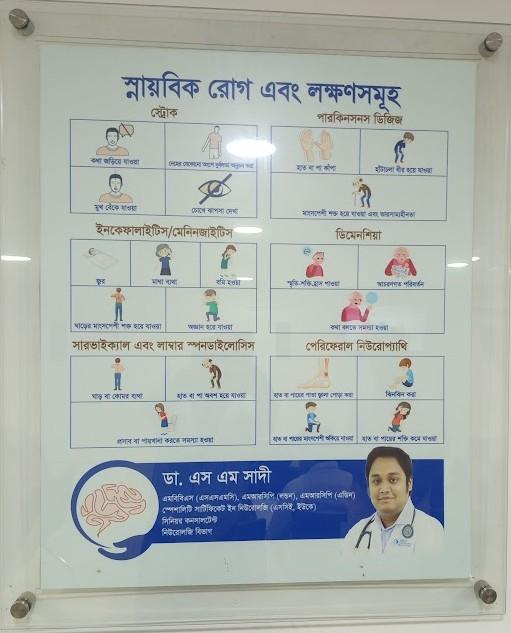
Neurological Diseases and Their Symptoms
Stroke
- Numbness or weakness in limbs
- Face drooping on one side
- Blurred vision
- Slurred speech
Parkinson’s Disease
- Trembling hands
- Slow movement
- Dragging feet while walking
- Loss of balance
Encephalitis / Meningitis
- Fever
- Mental confusion
- Seizures
- Headache
Dementia
- Memory loss
- Difficulty in daily activities
- Behavioral changes
- Mood swings
Seizure / Epilepsy
- Convulsions
- Jerking of arms and legs
- Loss of consciousness
- Frothing from the mouth
Neuropathy
- Numbness in hands and feet
- Burning sensation
- Pain or tingling
- Difficulty walking
Peripheral Neuropathy
- Tingling in hands and feet
- Difficulty walking
- Loss of balance
- Pain sensation
স্নায়বিক রোগ এবং লক্ষণসমূহ
স্ট্রোক
- অঙ্গ অবশ হয়ে যাওয়া
- এক পাশে মুখ বেঁকে যাওয়া
- চোখে ঝাপসা দেখা
- কথা জড়িয়ে যাওয়া
পার্কিনসন ডিজিজ
- হাত কাঁপা
- ধীরে ধীরে চলাফেরা
- হাঁটতে গিয়ে পা টেনে হাঁটা
- ভারসাম্য হারিয়ে যাওয়া
ইনসেফালাইটিস/মেনিনজাইটিস
- জ্বর
- মানসিক পরিবর্তন
- খিঁচুনি হওয়া
- মাথাব্যথা
ডিমেনশিয়া
- স্মৃতিভ্রম
- দৈনন্দিন কাজে সমস্যা
- মানসিক পরিবর্তন
- আচরণগত পরিবর্তন
সিজার/এপিলেপসি
- খিঁচুনি হওয়া
- হাত পা ছোড়া
- জ্ঞান হারানো
- মুখ ফেনা ওঠা
নিউরোপ্যাথি
- হাত পা অবশ হয়ে যাওয়া
- জ্বালাপোড়া অনুভব
- ব্যথা বা ঝিঁঝিঁ ধরা
- হাঁটতে সমস্যা
পেরিফেরাল নিউরোপ্যাথি
- হাত পা ঝিনঝিনি
- হাঁটতে কষ্ট
- ভারসাম্য হারানো
- ব্যথা অনুভব
Reference:
Dr. S. M. Sani
MBBS (Dhaka), FCPS (Medicine), MD (Neurology)
Specialist in Neurology and Internal Medicine (Dhaka, India)
Department of Neurology
More Health Tips:
Practical Health Advice & Medical Guidelines





Health Tips
Hot Water vs. Cold Water Bathing in Winter: Benefits and Key Differences
Hot water bathing in winter is widely preferred due to its soothing effect. Warm water helps relax muscles and joints, making it particularly beneficial for people experiencing stiffness, body aches, or arthritis during cold weather. It also improves blood circulation, which can provide temporary relief from fatigue and stress. Additionally, hot showers help open skin pores, allowing dirt and oil to be removed more effectively. However, excessive hot water bathing may dry out the skin, leading to irritation or itching, especially in winter when humidity levels are low.
On the other hand, cold water bathing in winter offers a different set of benefits. Cold water helps tighten skin pores, which can reduce moisture loss and support healthier skin. It also stimulates blood circulation and may boost alertness by activating the nervous system. Some studies suggest that cold showers can enhance immunity and improve mood by triggering the release of endorphins. Despite these advantages, cold water bathing may feel uncomfortable in winter and is not always suitable for individuals with respiratory issues, joint pain, or heart conditions.
In conclusion, both hot and cold water bathing have distinct benefits during winter. Hot water is ideal for relaxation and pain relief, while cold water supports skin health and mental alertness. Choosing the right option depends on personal health, tolerance, and comfort, with moderation being the key to maintaining balance and well-being.