Heart Valve Replacement
Case Study 1:
Mitral Valve Replacement of a Middle-aged Woman
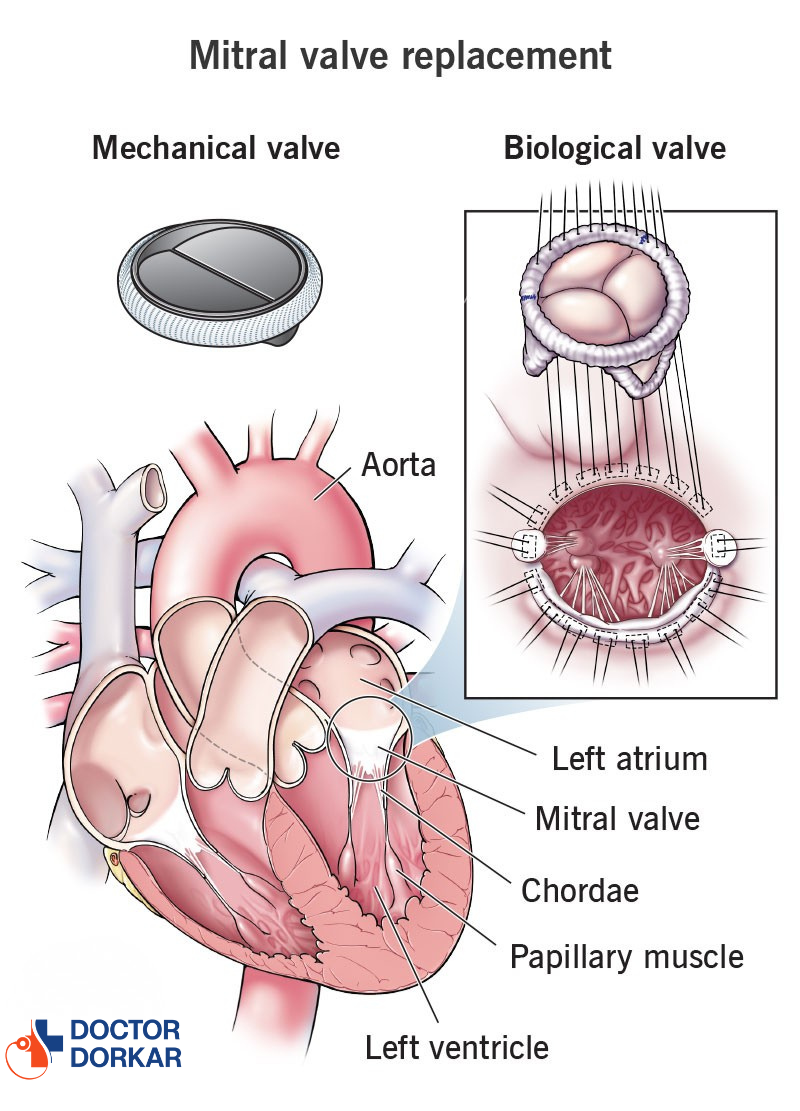
A 45-year-old female patient with severe mitral valve regurgitation successfully underwent open-heart mitral valve replacement using an ON-X mechanical valve at Ship International Hospital. The surgery was performed by Dr. Mohammad Moniruzzaman and was completed without complications.
This case documents the successful surgical management of severe mitral valve replacement in a 45-year-old female patient. Comprehensive diagnostic evaluation, appropriate surgical decision-making, and structured postoperative care resulted in complete symptom resolution and stable recovery.
Patient’s Background and Health Concerns
A 45-year-old female patient experienced generalized weakness, early fatigue, chest pain, and shortness of breath on mild exertion for several months. These symptoms gradually worsened over time and led to repeated medical visits before admission for further cardiac evaluation. The main health concerns reported by the patient included:
- Generalized weakness
- Early fatigue
- Chest pain
- Shortness of breath on mild exertion
She had a significant cardiac history of percutaneous coronary intervention (PCI) to the left anterior descending artery (LAD) in 2022. Despite this history, a recent coronary angiogram confirmed a patent stent in the LAD with otherwise normal coronary arteries.
Before presenting for surgical evaluation, the patient consulted several local general practitioners and cardiologists for symptom management. As symptoms persisted and progressed, further evaluation was pursued to determine the underlying cause.
Diagnosis and Medical Assessment
A detailed cardiac evaluation was performed to determine the cause and severity of the patient’s condition. Multiple diagnostic tests were used to assess heart structure, valve function, and overall cardiac status before confirming the diagnosis. Diagnostic investigations included:
- Electrocardiogram
- Chest X-ray
- Transthoracic echocardiography with color Doppler
- Contrast-enhanced CT scan of the chest
- Coronary angiogram
- Routine blood tests
Based on these investigations, the patient was diagnosed with severe mitral regurgitation with dilated left ventricle, along with hypertension (HTN) and diabetes mellitus (DM). The severity of mitral valve dysfunction explained the patient’s symptoms and clinical deterioration, and surgical intervention was advised.
Treatment Plan and Surgical Procedure
After careful review of all diagnostic results, surgical treatment was advised due to the severity of mitral valve disease. The patient was admitted on 1 January 2026, and the planned operation was performed on 4 January 2026 at Ship International Hospital.
The surgery was performed by Dr. Mohammad Moniruzzaman, MBBS, MS (Cardiovascular & Thoracic Surgery), Senior Consultant. Open-heart surgery was carried out using cardiopulmonary bypass. A 31/33 mm ON-X mechanical valve was used to replace the diseased mitral valve.
The procedure was completed successfully without intraoperative complications. The patient was smoothly weaned off cardiopulmonary bypass. After ensuring hemostasis, the chest was closed in layers with chest drains and a temporary pacing wire in place. The patient was then transferred to the Cardiac Intensive Care Unit (CICU) for postoperative care and monitoring.
Estuation was performed the following morning. Chest drainage tubes were removed on the second postoperative day, and the TPM was removed on the fifth postoperative day. The postoperative period remained uneventful.
Outcome and Patient’s Current Health Condition
The postoperative recovery followed a normal and uneventful course. The patient progressed steadily under routine postoperative care and was discharged on the 8th postoperative day after meeting recovery milestones.
After treatment, the patient became completely symptom free. Previous complaints of weakness, chest pain, and shortness of breath were fully resolved. She is now living a normal daily life and continues regular follow-up.
The patient expressed excellent satisfaction with the treatment, care, and overall hospital experience. The next follow-up is scheduled for 19 January 2026, which will include clinical history review and routine investigations, with additional tests if required.
This procedure was a major cardiac operation with known risks. The successful outcome reflects coordinated efforts from the surgical team, anesthesiology, OT staff, CICU nurses, ward nurses, and hospital support teams. Strong cooperation and trust from the patient and family also played an important role in recovery.